
Charts and diagrams
Graphs
Six plates for seeing the two books at a glance. Every chart is drawn from the KJV text and documented history, and every label links back to the chapter it came from.
Plate I
The sanctuary as a floor plan
Courtyard to Most Holy Place: altar, laver, candlestick, showbread, incense, ark. Revelation's five visions open, in order, on that furniture — the book is a guided walk deeper into the temple.
3. Holy Place
The seven candlesticks
Light for the walk
Revelation 1–3 — the churches · Revelation 1:12-134. Holy Place
Throne room and the sealed book
Bread — the covenant word
Revelation 4–7 — the seals · Revelation 5:1-75. Holy Place
Altar of incense
Prayer and intercession
Revelation 8–11 — the trumpets · Revelation 8:3-46. Most Holy Place
The opened temple and the ark
The throne and the law
Revelation 12–14 — the war and the messages · Revelation 11:19Most Holy Place
Sanctuary filled with smoke
Mediation finished
Revelation 15–22 — plagues and rescue · Revelation 15:8Beyond
No temple — God and the Lamb are the temple
Face to face
Revelation 21–22 — the city · Revelation 21:22
3. Holy Place
The seven candlesticks
Light for the walk
Revelation 1–3 — the churches · Revelation 1:12-134. Holy Place
Throne room and the sealed book
Bread — the covenant word
Revelation 4–7 — the seals · Revelation 5:1-75. Holy Place
Altar of incense
Prayer and intercession
Revelation 8–11 — the trumpets · Revelation 8:3-46. Most Holy Place
The opened temple and the ark
The throne and the law
Revelation 12–14 — the war and the messages · Revelation 11:19Most Holy Place
Sanctuary filled with smoke
Mediation finished
Revelation 15–22 — plagues and rescue · Revelation 15:8Beyond
No temple — God and the Lamb are the temple
Face to face
Revelation 21–22 — the city · Revelation 21:22
How to read this plate— show
Walk the plan left to right: courtyard first, then through the veil into the Holy Place, then the second veil into the Most Holy. Each numbered stop pairs the literal Old Testament furniture with the Revelation vision that opens on it, so the sinner's approach to God and the reader's path through Revelation are literally the same walk.
This proves Revelation is not a random sequence of visions: John was shown the sanctuary itself, in order, and simply reported what he saw furniture by furniture. That is why chapters 4-5 open on a throne room with a sealed book (where the table of showbread stood) and chapters 8-11 open at the altar of incense.
For a newcomer, the takeaway is that Revelation is a guided tour of the plan of salvation before it is a catalog of end-time symbols — start by finding where you are on that walk, and the harder symbols will make more sense in context.
Plate II
Repeat and enlarge
Daniel 2, 7, 8–9, 11–12 and Revelation 12–14 laid out as five passes over one history — Babylon, Medo-Persia, Greece, pagan Rome, divided Europe and papal Rome, then judgment and the kingdom.
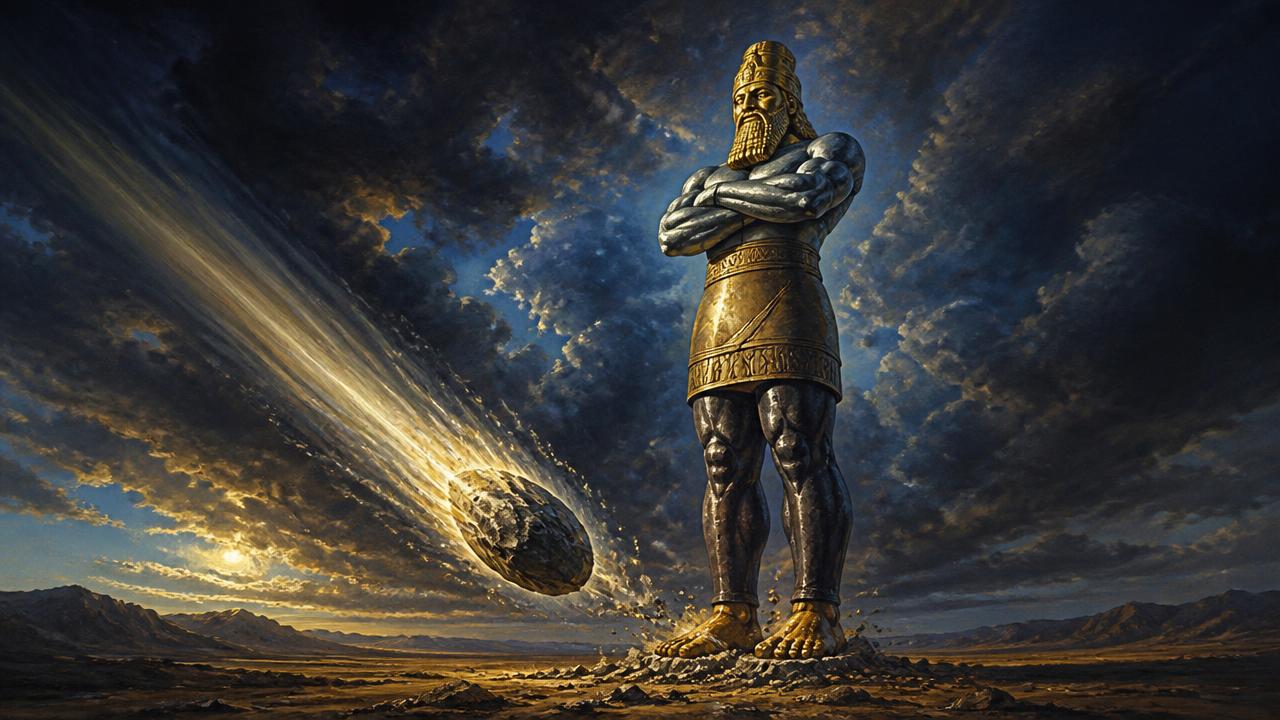

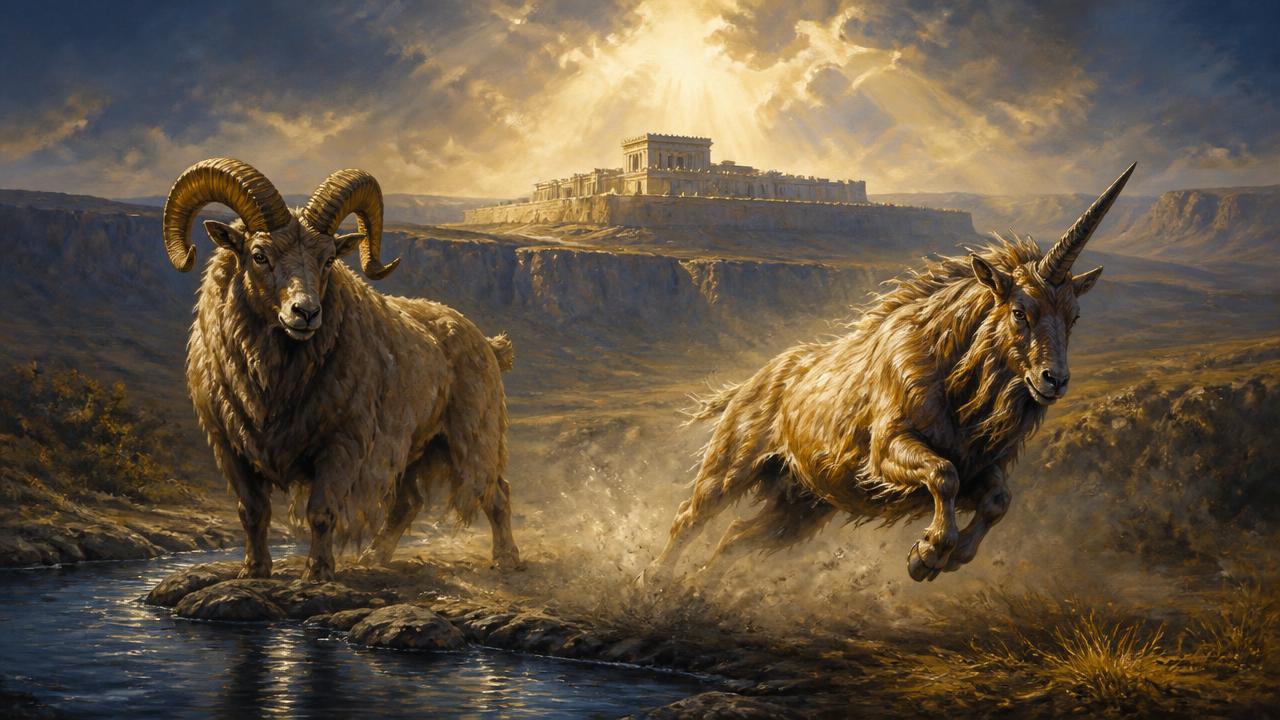
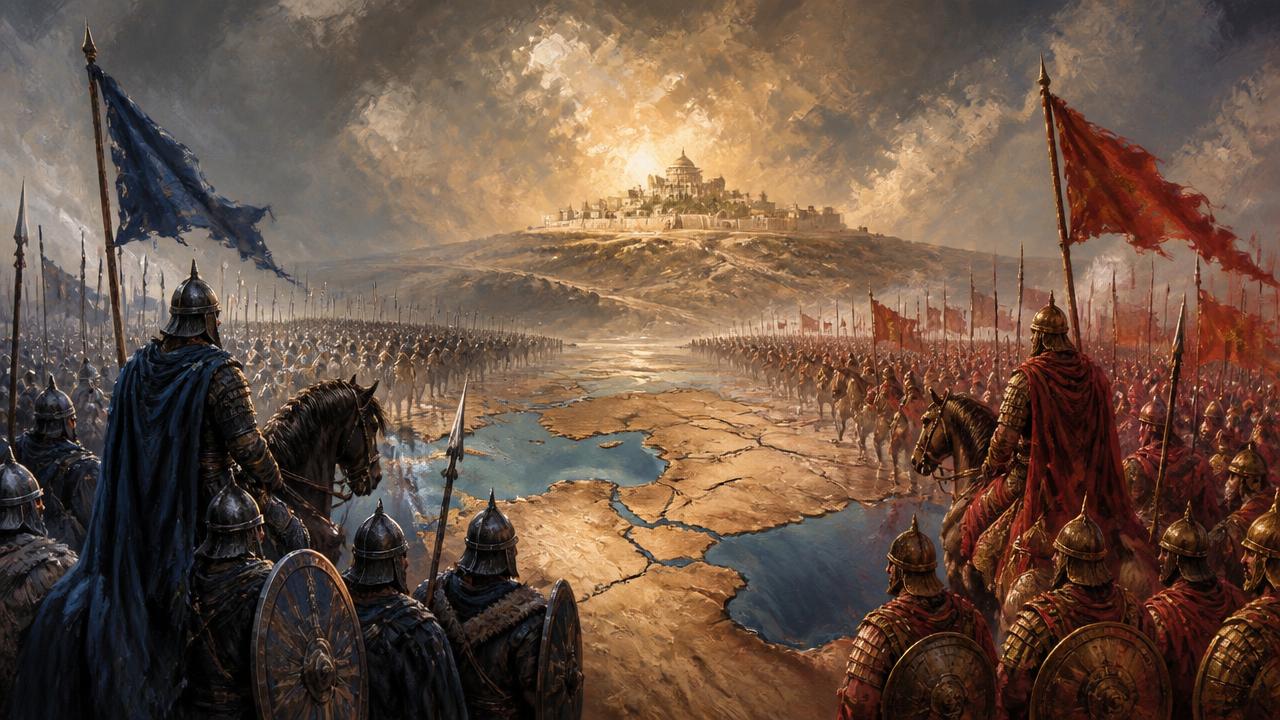
pass 1 — more detail
pass 2 — more detail
pass 3 — more detail
pass 4 — more detail
pass 5 — more detail
Hover or tab to an era heading to light up that column through all five passes. Each pass covers the same ground and adds detail — the visions do not describe different histories, they zoom in on one.
How to read this plate— show
Read each row as one pass through the same six eras — Babylon, Medo-Persia, Greece, pagan Rome, divided/papal Europe, judgment and kingdom — and read down each column to see how every vision covers that same era with more detail than the last. Daniel 2 sketches metals; Daniel 7 adds beasts and a little horn; Daniel 8-9 dates the sanctuary's cleansing; Daniel 11-12 narrates court intrigues; Revelation 12-14 adds the spiritual conflict behind it all.
This is the classic 'repeat and enlarge' pattern that proves Daniel and Revelation are not five separate predictions but one prophetic history told five times, each retelling adding detail rather than changing the storyline. It is also why the little horn of Daniel 7 and the beast of Revelation 13 land in the very same era column: divided/papal Rome.
The newcomer takeaway: if a symbol in one vision confuses you, check the same era column in the other visions — it is very likely described again there in plainer terms.
Plate III
Daniel 7 beside Revelation 13
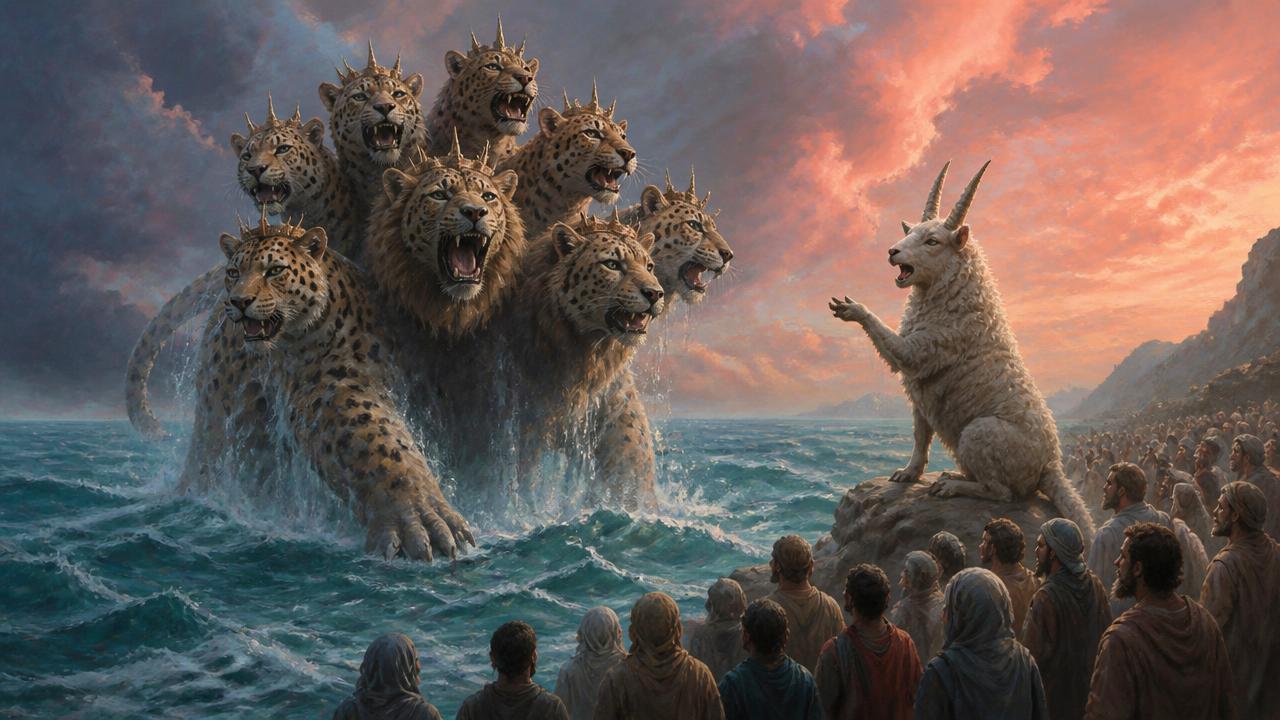
Trait by trait, the sea beast of Revelation 13 gathers up Daniel 7's lion, bear, leopard, ten horns, blaspheming mouth, war on the saints and 1260-year span.
Daniel 7
Four beasts and the little horn
Revelation 13
The composite beast from the sea
Rises from the sea
And four great beasts came up from the sea, diverse one from another.
And I saw a beast rise up out of the sea, having seven heads and ten horns.
Leopard, bear, lion
The first was like a lion... a second, like to a bear... another, like a leopard.
And the beast which I saw was like unto a leopard, and his feet were as the feet of a bear, and his mouth as the mouth of a lion.
Ten horns
A fourth beast... and it had ten horns.
Having seven heads and ten horns, and upon his horns ten crowns.
A blaspheming mouth
And he shall speak great words against the most High.
And there was given unto him a mouth speaking great things and blasphemies.
War on the saints
The same horn made war with the saints, and prevailed against them.
And it was given unto him to make war with the saints, and to overcome them.
The same 1260-year span
A time and times and the dividing of time.
And power was given unto him to continue forty and two months.
Judgment ends it
But the judgment shall sit, and they shall take away his dominion.
He that leadeth into captivity shall go into captivity.
Seven traits, matched line for line: Revelation 13 gathers Daniel 7's beasts into one power and carries the same 1260-year span.
How to read this plate— show
Read the two columns trait by trait: each row states one feature and then quotes the exact KJV wording each book uses for it. The pattern across all seven rows is that Revelation 13 does not introduce a different power — it gathers Daniel 7's lion, bear and leopard into one composite beast and keeps every other identifying mark: ten horns, a blaspheming mouth, war on the saints, the same 1260-year span, and judgment on it at the end.
This match, feature for feature, is the evidence that both texts describe the same historical power under two images — pagan-then-papal Rome, rising among and outlasting the divided kingdoms that followed Rome's fall. Nothing here depends on stretching a single word; it is seven independent identifying marks that all line up.
For someone new to this material: the aim is never to name individuals — it is a system identified by Scripture's own repeated, cross-referenced description, offered so that readers can test the claim against the text themselves rather than take it on authority.
Plate IV
Daniel and Revelation in ten words
Five visions on each side, welded together: statue and candlesticks, beasts and showbread, sanctuary and incense, cross and gospel, king and rescue.

CANDLESTICKS
The outline vision, then the light-bearing church walking through the same history: one statue of world empires, one candlestick of churches carrying the gospel through those same centuries.
SHOWBREAD
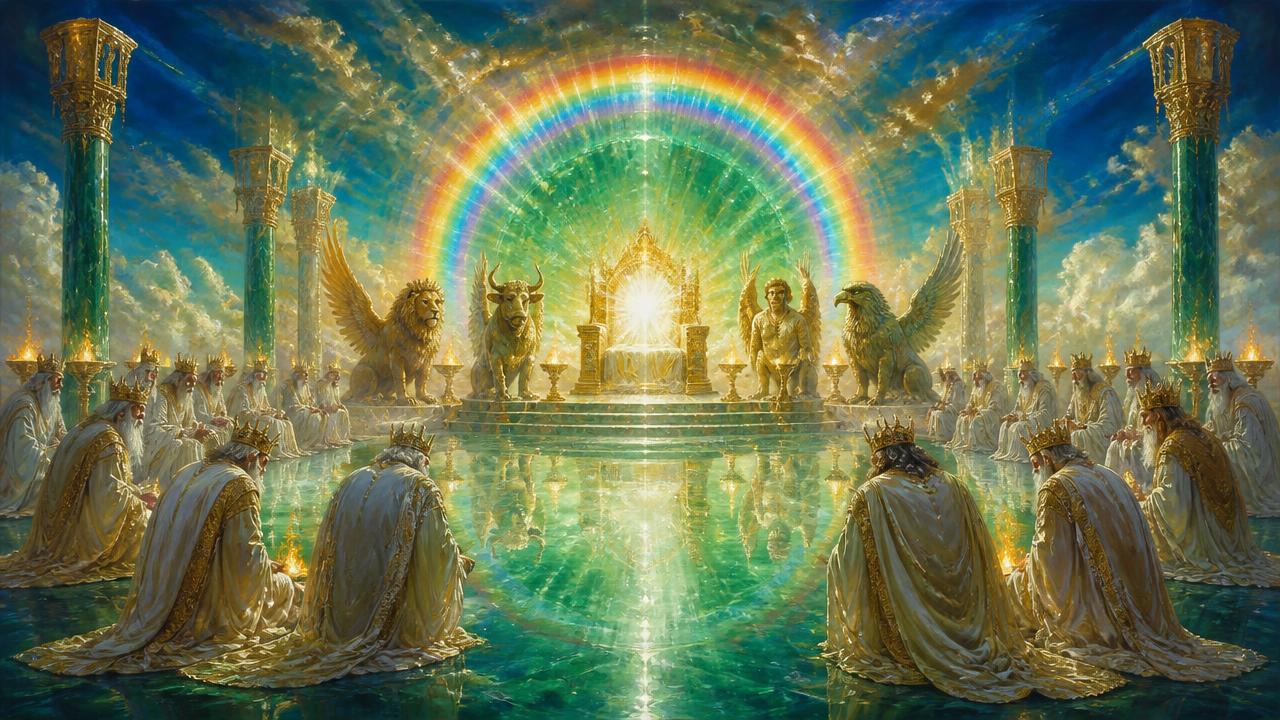
Judgment opens in Daniel 7; the sealed book is opened before the throne in Revelation 5 — both scenes place a court, a throne and an open book at the center of history.
The 2300 days end in the cleansing of the sanctuary; the trumpets open at the altar of incense, keeping the reader inside the sanctuary picture even as history moves forward.

The centre of the seventy weeks is Calvary; the centre of Revelation is the everlasting gospel — both books put the cross at the structural middle of their argument.
Daniel 11:40-12:2 and Revelation 15-22 narrate one final crisis and one deliverance — the last king's overreach answered by Michael standing up and Babylon's fall answered by the King's arrival.
How to read this plate— show
Each row pairs a Daniel vision with the Revelation vision that opens the same stretch of history, then names the single word this plate uses to anchor that pairing — MAN, BEASTS, SANCTUARY, CROSS, KING on the Daniel side; CANDLESTICKS, SHOWBREAD, INCENSE, GOSPEL, RESCUE on the Revelation side.
The pairing proves structural unity: five sections in Daniel line up with five sections in Revelation in the same order, each addressing the same era from a political angle in Daniel and a spiritual, church-centered angle in Revelation. It is not a coincidence of theme but a matched architecture running through both books.
For a newcomer, treat these ten words as a memory key: if you can place a passage under one of these ten words, you already know roughly where it sits in the shared timeline of both books.
Plate V
Word graph — the shared vocabulary
How often the two books reach for the same words, counted from the KJV text of both books and shown by default per 1,000 words so length does not skew the comparison.

- king / kingdom21.22.5
- book / written2.05.1
- beast1.84.9
- seven0.54.9
- holy / saints2.22.4
- throne0.33.8
- worship1.02.0
- horn1.60.8
- Babylon1.50.5
- judgment0.51.2
Counted directly from the KJV text of both books (11,630 words in Daniel, 12,003 in Revelation), and shown by default as a rate per 1,000 words so book length does not skew the bars. The shared vocabulary — kingdom, beast, horn, throne, holy, seven, book, judgment, worship, Babylon — is the reason the two books read as one.
How to read this plate— show
The bars show how often each book reaches for the same cluster of words, counted directly from the KJV text and expressed as a rate per 1,000 words so that Revelation's slightly greater length does not exaggerate its totals. Daniel leans heavily on king/kingdom language because it narrates the rise and fall of literal empires; Revelation leans on beast, throne, seven and worship because it narrates the spiritual conflict playing out behind those same empires.
The overlap itself is the point: both books share a working vocabulary — kingdom, beast, horn, throne, holy, seven, book, judgment, worship, Babylon — that shows up nowhere near as densely anywhere else in Scripture. That shared vocabulary is strong internal evidence that the two books were meant to be read as a matched pair.
For a newcomer, this chart is a reason to stop treating Daniel and Revelation as unrelated: the sheer concentration of shared terms is something you can verify yourself by opening a concordance to either book.
Plate VI
The time prophecies on one line
Seventy weeks, 2300 days and the 1260 years measured on a single scale, so the shared 457 BC starting point and the 1798 and 1844 termini are visible together.
490 days = 490 years · Daniel 9:24-27
457 BC decree, Messiah anointed at His baptism AD 27, cut off in the midst of the final week at the cross AD 31, the seventy weeks close AD 34 as the gospel turns fully to the nations.
Go deeper: The 70 weeks — 490 years2300 days = 2300 years · Daniel 8:14
The seventy weeks are cut off from the front of this same 2300-day span sharing one starting decree; the longer line runs on past AD 34 and closes in 1844 with the cleansing of the sanctuary.
1260 days = 1260 years · Daniel 7:25; Revelation 13:5
One span given five separate times over in Daniel and Revelation — always the same 1260 years, AD 538 to 1798 — describing the period when papal Rome held civil dominion over the divided kingdoms of Europe.
Magnified — the seventieth week
Seven years, one week of the seventy, drawn at scale. The covenant is confirmed by Messiah Himself; there is no gap and no detached final week.
- AD 27 — Messiah anointed at His baptism, when the Spirit descended and the public ministry that fulfils Daniel 9:25 began.
- AD 31 — The cross, in the midst of the final week: Messiah cut off, and the sacrificial system’s meaning is fulfilled rather than merely interrupted (Daniel 9:27).
- AD 34 — The seventy weeks close and favor to national Israel as the sole channel of the gospel ends; the gospel call goes fully to the nations (Daniel 9:24; Acts 7).
Symbolic days stand for years (Numbers 14:34; Ezekiel 4:6). The seventy weeks are cut off from the front of the 2300 days — the two lines share one starting decree, which is why one date fixes both. Hover an anchor date to see what it marks.
How to read this plate— show
All three prophetic time periods are drawn on one scale so their shared starting point and their separate termini are visible at once: the seventy weeks and the 2300 days both start at the 457 BC decree of Artaxerxes; the seventy weeks close at AD 34, the 2300 days run on to 1844; the 1260 years run a separate span, AD 538 to 1798, describing dominion rather than a countdown.
This single scale is itself the argument: because the seventy weeks can be checked against secular history (landing exactly on Christ's baptism and death), the shared starting point gives good reason to trust where the longer 2300-day line points, and the 1260-year span is independently confirmed by the well-documented events of 538 and 1798.
For a newcomer: no date here is invented or extended beyond what the text states — every terminus is either fixed by the prophecy's own wording or fixed by a widely documented historical event, and the point of it all is Daniel 8:14's answer: the sanctuary, and with it Christ's ministry for sinners, would move into its final phase in 1844.