
Act III · Milestone 6 of 9
Revelation 15–16 — The Seven Last Plagues
The sanctuary in heaven closes, the intercession ends, and seven angels carry out the last unmixed answer of a God who has waited longer than anyone knows.
Revelation 15–16 · about 16 minutes
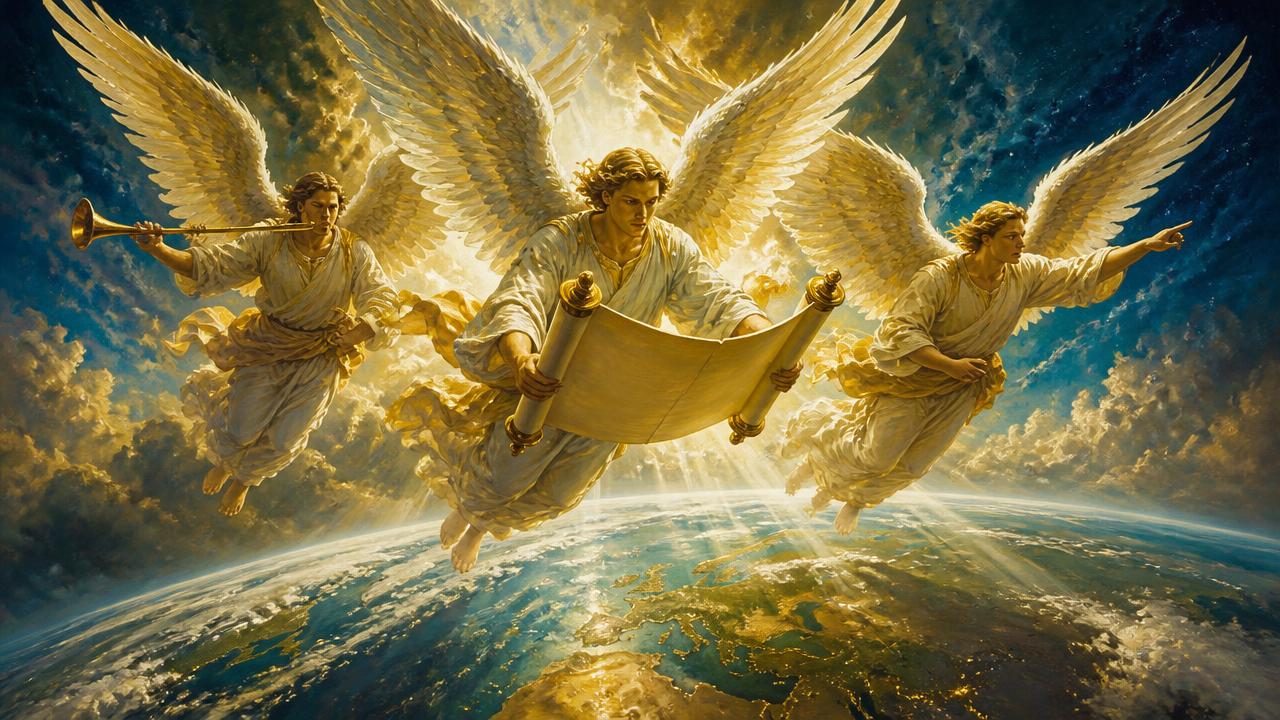
1And I saw another sign in heaven, great and marvellous, seven angels having the seven last plagues; for in them is filled up the wrath of God.
5And after that I looked, and, behold, the temple of the tabernacle of the testimony in heaven was opened:
6And the seven angels came out of the temple, having the seven plagues, clothed in pure and white linen, and having their breasts girded with golden girdles.
7And one of the four beasts gave unto the seven angels seven golden vials full of the wrath of God, who liveth for ever and ever.
8And the temple was filled with smoke from the glory of God, and from his power; and no man was able to enter into the temple, till the seven plagues of the seven angels were fulfilled.
1And I heard a great voice out of the temple saying to the seven angels, Go your ways, and pour out the vials of the wrath of God upon the earth.
2And the first went, and poured out his vial upon the earth; and there fell a noisome and grievous sore upon the men which had the mark of the beast, and upon them which worshipped his image.
12And the sixth angel poured out his vial upon the great river Euphrates; and the water thereof was dried up, that the way of the kings of the east might be prepared.
13And I saw three unclean spirits like frogs come out of the mouth of the dragon, and out of the mouth of the beast, and out of the mouth of the false prophet.
14For they are the spirits of devils, working miracles, which go forth unto the kings of the earth and of the whole world, to gather them to the battle of that great day of God Almighty.
15Behold, I come as a thief. Blessed is he that watcheth, and keepeth his garments, lest he walk naked, and they see his shame.
Watch the scene first
Seven angels stand with seven golden vials — 'the seven last plagues; for in them is filled up the wrath of God.' Before they pour, John sees a sea of glass mingled with fire, and on it the people who 'had gotten the victory over the beast' singing the song of Moses and the Lamb. Then the temple of the tabernacle in heaven opens, the angels come out clothed in pure white linen, and the temple fills with smoke from the glory of God — 'and no man was able to enter into the temple, till the seven plagues were fulfilled.' The door of mercy, open since Eden, is closed.
Exodus, replayed at world scale
The plagues deliberately echo the ten on Egypt — sores, sea turned to blood, scorching heat, darkness on the throne, drying waters, a final deliverance. That echo is the interpretation: Revelation 16 is the Exodus of the whole world. The song in chapter 15 is 'the song of Moses... and the song of the Lamb' because this is the Red Sea moment of history — a people delivered out of an empire that would not let them go. Egypt, Babylon, the beast: one oppressor in three costumes, and one God who still says 'let my people go.'
Why 'unmixed' is mercy
The plagues fall only after probation closes — they are not evangelism tools but the exposure of what Babylon already is. The beast's kingdom goes dark (16:10) and 'they repented not' — the plagues reveal hearts, they do not change them. God's wrath here is 'unmixed' with mercy not because God has changed but because the intercessor has stood up (Daniel 12:1). It is the most sober scene in the book, and it is framed by a promise, tucked into the sixth plague like a whispered blessing: 'Behold, I come as a thief. Blessed is he that watcheth, and keepeth his garments.'
Armageddon is a battle for worship
The sixth plague dries up the Euphrates — the river of Babylon, exactly as Cyrus dried the literal river to take literal Babylon (Daniel 5). Out of the dragon, the beast, and the false prophet come 'spirits of devils' gathering the kings of the earth 'to the battle of that great day of God Almighty... into a place called in the Hebrew tongue Armageddon.' The final conflict is not about oil or borders; it is the last gathering of the whole world's powers against the authority of God — Babel's tower, rebuilt one final time, just before the city falls.
Check what you saw
Two questions on this scene. Answers show an explanation either way.
How do the plagues differ from the trumpets?
What Old Testament event supplies the imagery?
Talk it through
- —Why does the scene include a song of Moses and of the Lamb?
- —What does 'they repented not' add to the meaning of judgment?
Good prompts for a study group, or for the reflection journal on the Today page.